Sunday, July 6, 2008

3A- World Cities: Los Angeles and San Francisco

Both Los Angeles and San Francisco are cities filled with much diversity. Each city has a mix of different ethnic backgrounds. Since these two cities are so diverse, you can find a restaurant specializing anywhere from Brazilian food all the way to Vietnamese food. It relates to humanities because we have to be able to understand the location in order to understand everything that makes up those cities.


What are some assumptions/stereotypes you think people have of each location: 1 point

Los Angeles: Los Angeles main stereotype is if you want to become famous you have to go to L.A. Many people come to Los Angeles yearly to pursue their acting, singing and modeling careers.


San Francisco: San Francisco is known for being liberal and when most people think of Californians they directly relate them to San Francisco. San Francisco is well-known for its large gay community, which adds to the diversity of the city.

3 reasons Los Angeles and San Francisco are alike:
  • Both cities bring in thousands of tourists a year.

  • Both cities are subject to earthquakes. If an earthquake hits, both cities could end in disasters.

  • Los Angeles and San Francisco are two of the most diverse cities in California


List 3 things that make each location so different: 1 point

  • Even though they both bring in tourists Los Angeles brings in tourists because of Hollywood and S.F. because of the bay.

  • The climate is different. Los Angeles can be very hot, while San Francisco is mostly cloudy and on average doesn't get too hot.

  • Los Angeles may have the stereotype of rich and fame, but it costs more to live in San Francisco.
Links:
http://www.lacity.org/

http://en.wikipedia.org/wiki/Los_Angeles,_California

http://www.onlyinsanfrancisco.com/

http://en.wikipedia.org/wiki/San_Francisco,_California

Wednesday, July 2, 2008

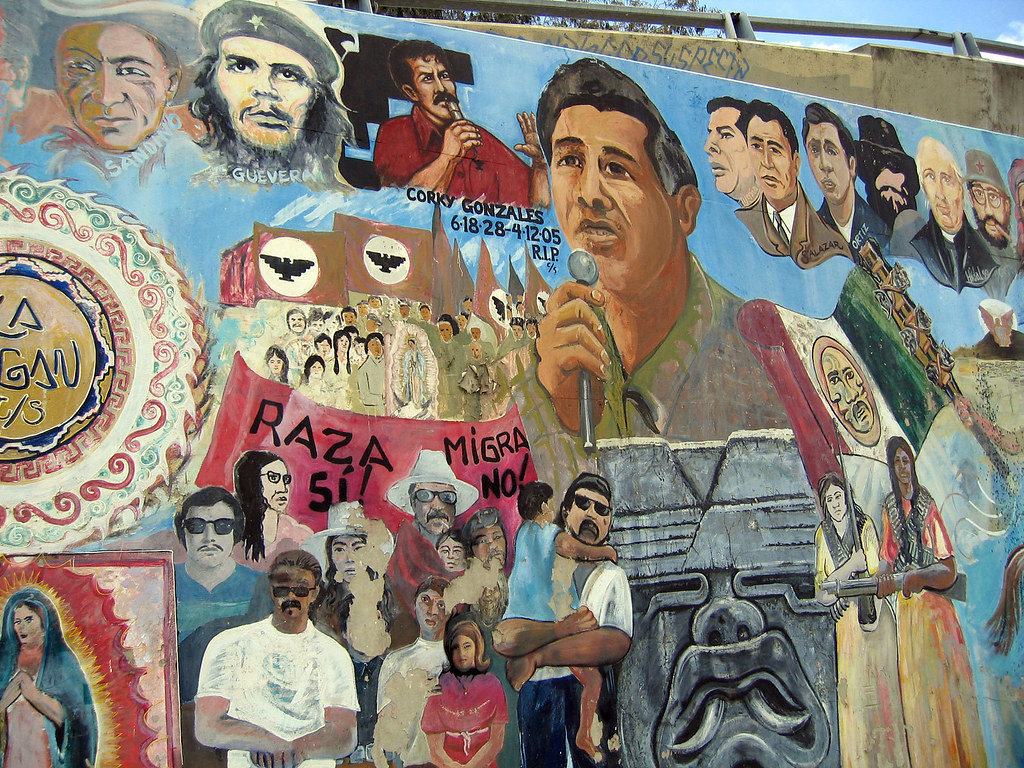
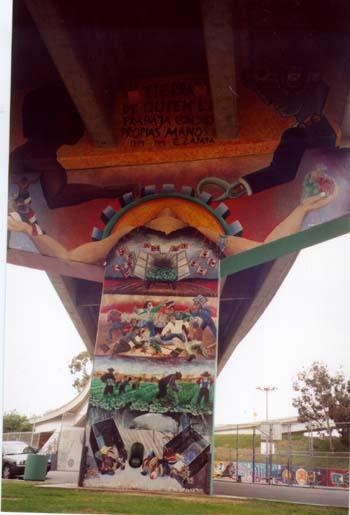
2C- Chicano Park

Chicano Park is located in San Diego. It was established on April 22, 1970. It represents a place of unity, hope and future for many Chicanos and Latinos of that area.


Observation: What did you choose? What do you see or hear or feel or think of in the choice you made? What is the subject of the work? If you chose a 'thing' what is the work made of and what techniques (colors, lines, shapes, textures)does the creator use? Be specific in your description. If you chose a place, be specific in your description of what you see or hear. Talk to your reader as though they cannot see the item but somehow must draw a painting of what you see or hear. 1 point

I picked Chicano Park, for the simple fact that I have never been there and have always wanted to go. From the images I've researched it seems people are having fun and many people gather there. The entire park is surrounded of murals painted by the people from the community. The murals are to remind them of their past and to represent the people of today. It's also to bring hope for a brighter and better future for Latinos.


Interpretation: What is your choice about? Give specific examples to support this statement in 2 sentences; do so in a way that teaches us something about your choice. Make Paulo Freire proud! .75 point


This choice to me is about my culture. It's a nice feeling knowing that people are uniting to provide a brighter future for themselves and their families. Education is key to make a better name for yourself, your family, your community, and your people.


Judgment: What led you to your choice? What do you think or feel about this choice? Why do you feel this way? Support your thoughts with specific observations. .5 point

I picked the Chicano Park because I drove by it once while my family and I made a quick trip driving to San Diego and then to Mexico. We weren't able to stop by, but I was able to see some of the murals but not in detail. After that day, I've always had a great curiosity for the park.

Using your classmates work from last week, tell us one thing you learned from 1 student. Is this one thing some common experience you share or some experience that is completely different than what you experienced? Is this one thing related to our class theoretical foundation and if so, how? Is that one thing related to historical or cultural context of this country or a different one?


Denya's Blog:


Denya picked San Francisco State University. She plans on going there next fall. Denya thinks, "San Francisco State is about our thirst for knowledge. " I agree with her to a certain degree. I think our thirst for knowledge is a great thing and when you find the right school for you, it will definitey satisfy, hopefully, your every need. Education is highly important for me and seeking higher education has always been a dream of mine and my family's.


Links:


2B Fine Arts Museum of San Francisco - De Young Museum


The De Young Museum was established in 1895 in San Francisco's Golden Gate Park. In October of 2005 the museum reopened with a new facility. The museum contains different exhibitions representing different culltures. The museum contains many priceless items including art of Native Americans and art from America between the 17th and 20th centuries.


Observation: What did you choose? What do you see or hear or feel or think of in the choice you made? What is the subject of the work? If you chose a 'thing' what is the work made of and what techniques (colors, lines, shapes, textures)does the creator use? Be specific in your description. If you chose a place, be specific in your description of what you see or hear. Talk to your reader as though they cannot see the item but somehow must draw a painting of what you see or hear. 1 point

I chose the De Young Museum located in San Francisco. The De Young Museum exhibits beautiful pieces of artwork and artifacts from all over the world. It also exhibits art representing all the different cultures in the United States. In October, the museum will be showcasing Asian-American Art and about a year ago they were showcasing Chicano Art. Inside is engaging and full of information, but the architecture of the museum is striking and quite unique.


Interpretation: What is your choice about? Give specific examples to support this statement in 2 sentences; do so in a way that teaches us something about your choice. Make Paulo Freire proud! .75 points

I picked the De Young Museum because last year was the first time I visited. I went to see the Chicano Art exhibition presented by Cheech Marin. All the paintings were filled with stories, stories I could relate to, and so much culture. It was about my me in a way, because I was able to see part of my life and part of my feelings reflected in these paintings, something I've never felt.


Judgment: What led you to your choice? What do you think or feel about this choice? Why do you feel this way? Support your thoughts with specific observations. .5 point


The De Young Museum was my first choice because I recently visited it after seeing the Chicano Art Exhibition. After learning more about the museum, they welcome art from other countries and different cultures. When I got out of the Chicano Art Exhibition, I saw that they have artifacts from the indigenous people from Latin America. It seems to me, they want the people who visit the museum to learn and experience new things.


Questioning: What else would you like to know about this choice? When completing the question section, lead your audience into the question by stating a fact you do know, yet you still have the related question. This way, both your audience and you will have an educational experience. Example: I learned that John Steinbeck's Grapes of Wrath was based on his personal experience working with farm workers. I would like to know if the characters he used in that book are fictitious or are they people he met? .5 point

I know the De Young Museum reopened in 2005 , but what happened before and who was the architect?

When the De Young Museum was founded in was built in San Francisco on the San Andreas Fault. In 1989, the museum was badly damaged by the earthquake. The main architects were Fong and Chan and the designers were Herzog & de Meuron.


5. Using your classmates work from last week, tell us one thing you learned from 1 student. Is this one thing some common experience you share or some experience that is completely different than what you experienced? Is this one thing related to our class theoretical foundation and if so, how? Is that one thing related to historical or cultural context of this country or a different one? 5 point

Barrett's Blog

http://srjcstud8568.blogspot.com/2008/06/week-1-project-1a.html

Barrett thinks it's important to appreciate the history of science. It's an experience that he enjoys and thinks that it will intrigue both young and old people. I think science is important as well. Last time I went to a science place was to the Exploratorium many years ago. I agree science and the inventors/scientists should be acknowledged and appreciated.

If you want to know more about the Chicano Art Exhibition I saw follow this link:

http://www.chicano-art-life.com/cheech.html

Links:

http://en.wikipedia.org/wiki/De_Young_Museum

http://www.famsf.org/deyoung/index.asp


2A Muir Woods


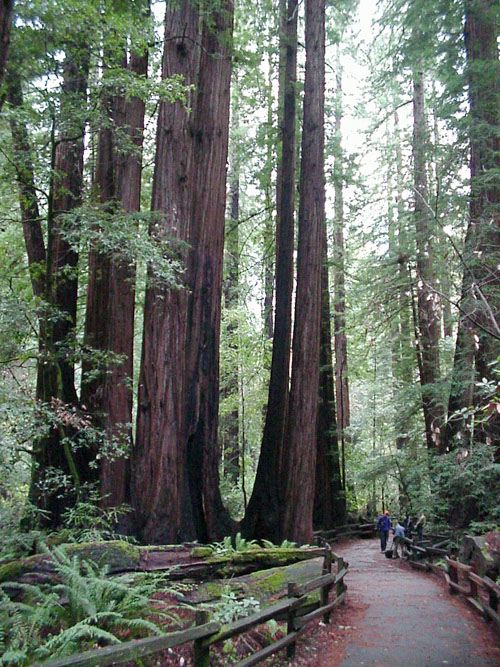
a. Observation: What did you choose? What do you see or hear or feel or think of in the choice you made? What is the subject of the work? If you chose a 'thing' what is the work made of and what techniques (colors, lines, shapes, textures)does the creator use? Be specific in your description. If you chose a place, be specific in your description of what you see or hear. Talk to your reader as though they cannot see the item but somehow must draw a painting of what you see or hear. 1 point


For the place, I decided to choose Muir Woods National Monument . It's located in Marin County and it's well known for its beautiful Redwood Trees. I specifically picked Muir Woods, because I visited it once and absolutely loved it. For some reason, I have not returned. Some people may not find interesting, but when you start walking into the redwood forests you are surrounded by 300 foot trees. The rest of the planets and wildlife adds to the scenery of the place. I went when it was raining and it actually made the forest look almost enchanting. It was truly a unique experience.


Interpretation: What is your choice about? Give specific examples to support this statement in 2 sentences; do so in a way that teaches us something about your choice. Make Paulo Freire proud! .75 point
Being in Muir Woods was a unique experience, like I said before. You feel so small in this world and in a way you realize how enormous this planet is and all the beauty it contains. I truly appreciate the beauty of trees and how grateful I am to have this monumental park so close to home. It may sound silly, but I value my place in this world more because I realized that there is so much more out there.
Judgment: What led you to your choice? What do you think or feel about this choice? Why do you feel this way? Support your thoughts with specific observations. .5 point

My younger cousin had gone as a field trip and said he liked it. I decided to go since I live in Marin County. I went and from what I have written you know that I fell in love with the place. My father would always take my brother and me hiking to China Camp (in San Rafael, CA) and I always liked being in nature. China Camp has lovely oak trees but they're tiny compared to the immensity of the redwood trees. My father has a passion for the outdoors, not so much hiking and bird watching, and I think that has a lot to do with how I felt about Muir Woods.

Questioning: What else would you like to know about this choice? When completing the question section, lead your audience into the question by stating a fact you do know, yet you still have the related question. This way, both your audience and you will have an educational experience. Example: I learned that John Steinbeck's Grapes of Wrath was based on his personal experience working with farm workers. I would like to know if the characters he used in that book are fictitious or are they people he met? .5 point

I know that Muir Woods is a national monument. I want to know when and why it became a national monument.

Muir Woods became national monument on January 9, 1908. The proclamation was made by President Theodore Roosevelt. William and Elizabeth Kent bought 611 acres of the "Bay Area's last uncut stands of old-growth redwoods" in 1905. To protect the trees they donated 211 acres to the Federal government.


5. Using your classmates work from last week, tell us one thing you learned from 1 student. Is this one thing some common experience you share or some experience that is completely different than what you experienced? Is this one thing related to our class theoretical foundation and if so, how? Is that one thing related to historical or cultural context of this country or a different one? 5 points


Denya's Blog
http://dbeaudryhuman7.blogspot.com/2008/06/2a-san-francisco.html


The location Denya choose was San Francisco and she likes going there because many different cultures can be found in one city. I completely agree. I love San Francisco for the same reason. It's fun seeing the different aspects that make up a culture rather than just reading from a book. Not to mention some of the best food can be found in the City!


This link will show you a slideshow of Muir Woods:
http://www.youtube.com/watch?v=XT2FUx_OjxE


Links:

http://www.nps.gov/muwo/historyculture/index.htm

http://en.wikipedia.org/wiki/Muir_Woods

Friday, June 20, 2008

Week 1 Project 1C

One of our classmates is Denya Beaudry. Denya hopes to transfer to San Francisco State with a major in Business and Information Systems.

Two things I learned from her about Paulo were:
  • Paulo Freire was a believer in Liberation Theology.
  • He taught 300 sugarcane workers how to read and write in 45 days.

Another one of our classmates is Barrett. He is planning on transferring to UC Santa Barbara and majoring in Business Economoics.

Two things I learned from him about Paulo were:
  • Due to the Great Depression Friere's family was forced to relocate to Joboatoa, Brazil.
  • And he spent 10 years workin for Brazil's Social Service of Industry.

Week 1 Project 1B


Paulo Freire


Paulo Freire is considered "the most influential thinker about education in the late twentieth century."


Paulo Freire was in Brazil, where he attended a university with the initial hopes of graduating with a law degree. After his children were born, he changed his mind and began working as a welfare official. He later became the director of the Department of Education and Culture of Social Service in Pernambuco. Freire's work as a welfare official and director is what motivated him to explore why there is a lack of education among poor people. Freire, along with other colleagues did work with illiterate adults. Everyone they taught was able to learn the how to read and write.


In 1964, Paulo Freire was exiled from Brazil because the government disagreed with his work on educating the rural poor. Several years later, after the publication of his book he was allowed to return to his country under political amnesty.


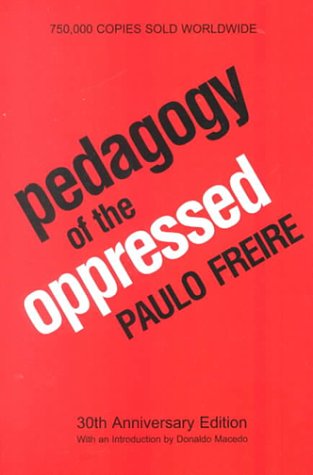
During his exile, Freire wrote Pedagogy of the Oppressed in which he spoke about the ongoing struggle with the education system. In his book he examines the oppression people have suffered and how it has become justified (and of course, what needs to be done to change that).


In his honor, thePaulo Freire Institute was formed in Brazil that strives to educate adults, as well as disadvantaged people.


Links:

Wednesday, June 18, 2008

Week 1 Project 1A

1. What is your first name only ?

Hi my name is Lizabeth!

2. Why are you taking this class?

I'm taking the class as a transfer requirement. I'm a nursing major, planning to transfer to the University of San Francisco. Also, because I know I'll find humanities interesting.

3. How far do you live from SRJC main campus?

I live in Novato, which is 30.8 miles from the SRJC campus (33 minutes, if there's no traffic). I usually go to the Petaluma campus and that's 15.8 miles making it 21 minutes.

4. What do you hope to learn from this class?

I'm open to learning anything. I saw a bit of the book we are going to be reading and it seems interesting, so I'm looking forward to reading it.

5. Have you created a blog or webpage in the past?

I used to have a Myspace page. Does that count? But I didn't do any blogging on it.